
High myopia surgery is now a reality for many patients whose correction exceeds -6 dioptres. Long regarded as a relative contraindication to laser refractive surgery, high myopia now benefits from reliable, personalised surgical solutions. What techniques are available, what are their limits and their results? This article gives a complete overview of the options open to highly myopic patients.
High myopia surgery: definition and clinical challenges
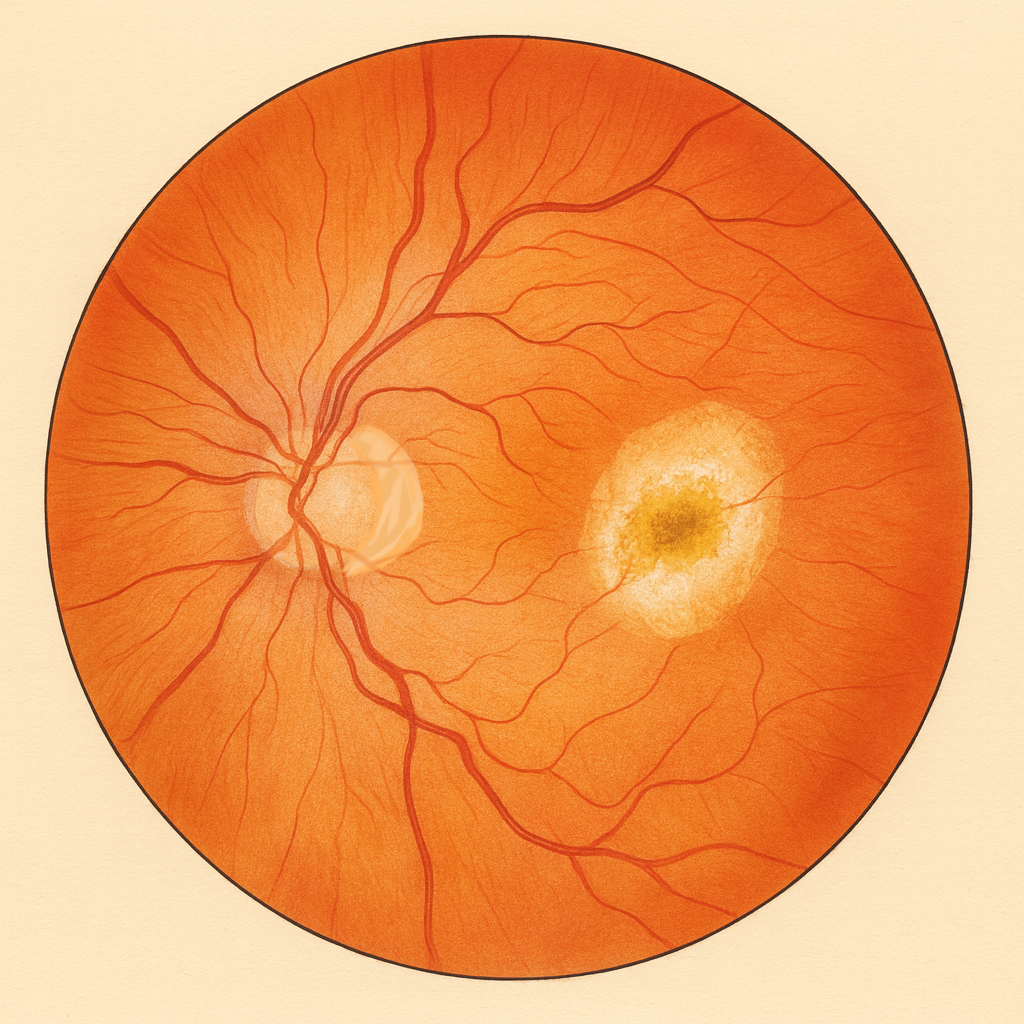
We speak of high myopia when the refractive error reaches or exceeds -6 dioptres. At this stage, uncorrected vision is considerably impaired, and dependence on glasses or contact lenses becomes a genuine daily handicap. High myopia is often accompanied by significant anatomical changes to the eye, in particular excessive elongation of the eyeball and peripheral retinal thinning.
High myopia surgery therefore comes with particular requirements: the surgeon must precisely assess the residual corneal thickness, the stability of the visual defect and the retinal status before proposing a suitable solution. A thorough pre-operative work-up is essential to determine the feasibility of the procedure.
The limits of the laser in high myopia surgery
LASIK and PRK work by reshaping the cornea to correct the refractive error. The higher the myopia, however, the greater the amount of corneal tissue that must be removed. This is where the limits of the laser against high myopia lie:
- Minimum corneal thickness: at least 250 to 300 microns of residual stroma must be preserved after treatment to maintain the strength of the cornea ;
- Optical treatment zone: beyond -8 to -10 dioptres, the treated optical zone can become too narrow, generating night-time halos ;
- Risk of corneal ectasia: excessive thinning of the cornea can cause progressive post-operative deformation ;
- Visual quality: optical aberrations increase in proportion to the magnitude of the laser correction.
In practice, laser high myopia surgery generally remains feasible up to -8 to -10 dioptres, provided the cornea is sufficiently thick and regular. Beyond that, other techniques must be considered.
High myopia surgery: the available surgical techniques
The management of high myopia surgery draws on a range of solutions tailored to each patient's profile:
- Femtosecond LASIK: the reference technique for myopia up to -8/-10 dioptres with a compatible cornea ;
- PRK (Photorefractive Keratectomy): an alternative for thinner corneas, with a slightly lower correction range ;
- Phakic implant (ICL): an intraocular lens placed in front of the natural lens, ideal for myopia beyond -8 dioptres ;
- Clear lens extraction: considered in presbyopic patients with very high myopia, replacing the natural lens with a multifocal implant.
The choice between these techniques depends on a complete examination carried out during the pre-operative work-up. The surgeon takes into account the patient's age, corneal topography, anterior chamber depth and endothelial cell count.
The phakic implant: the solution of choice beyond the limits of the laser
When the laser reaches its limits, the phakic implant represents the most effective solution for successful high myopia surgery. It is a biocompatible lens, often of the ICL (Implantable Collamer Lens) type, inserted between the iris and the natural crystalline lens.
This technique offers several major advantages:
- Extended correction: up to -18 dioptres, or even more, with the possibility of correcting an associated astigmatism ;
- Reversibility: the implant can be removed or exchanged if necessary, unlike the laser, which permanently alters the cornea ;
- Superior optical quality: no corneal modification, therefore fewer aberrations and excellent night vision ;
- Fast recovery: vision is usually excellent from the day after the procedure.
The phakic implant is therefore a fundamental pillar in the strategy of high myopia surgery for patients who are not eligible for LASIK.
The ideal profiles for high myopia surgery
Not all patients with high myopia are suited to the same surgical technique. Here are the typical profiles that guide the choice:
- Patient aged 25 to 40, myopia between -6 and -10 dioptres, thick cornea (> 520 µm): ideal candidate for LASIK or PRK ;
- Patient aged 21 to 45, myopia greater than -8 dioptres, thin or irregular cornea: preferred candidate for a phakic implant ;
- Patient over 50, high myopia with presbyopia: potential candidate for clear lens extraction with a multifocal implant.
This pre-operative work-up makes it possible to classify each patient precisely and to propose the technique offering the best benefit-risk ratio.
What results can be expected from high myopia surgery?
The results of high myopia surgery are now very encouraging, whatever the technique used. With LASIK, studies show that more than 90% of patients operated on for myopia between -6 and -10 dioptres achieve a visual acuity of 20/25 or better without correction. As for the phakic implant, the results are even more predictable for very high myopia, with overall satisfaction exceeding 95% in the large published series.
It is important to point out, however, that surgery does not change the axial length of the eye. Regular retinal monitoring therefore remains essential after the procedure, because the risk of retinal complications linked to high myopia persists independently of the surgical correction.
When to consult Dr Gozlan for high myopia surgery?
It is advisable to consult as soon as your myopia has been stable for at least two years and you wish to free yourself from your glasses or contact lenses. A complete work-up prior to high myopia surgery will determine your eligibility and the technique best suited to your situation.
You should also consult promptly if you have worn contact lenses for a long time and feel a growing intolerance, or if your high myopia limits your professional or sporting activity. Dr Gozlan will support you at every stage, from diagnosis to post-operative follow-up.
📍 Consultation at the Paris – Auteuil Ophthalmology Practice
Dr Gozlan, an ophthalmic surgeon specialising in refractive surgery at the Paris – Auteuil Ophthalmology Practice, welcomes you for your pre-operative work-up and your complete care.
Book an appointment on DoctolibFAQ: high myopia surgery — frequently asked questions
Can high myopia surgery be considered beyond -10 dioptres?
Yes, high myopia surgery is entirely possible beyond -10 dioptres thanks to the phakic implant (ICL), which can correct myopia of up to -18 dioptres. The laser alone is generally no longer sufficient at these levels of correction.
Is high myopia surgery painful?
The procedure is performed under local anaesthesia using eye drops. Whether for LASIK, PRK or the placement of a phakic implant, high myopia surgery is painless during the procedure itself. Slight discomfort may arise in the hours that follow, quickly relieved by the prescribed treatment.
What are the specific risks associated with high myopia surgery?
The main risks include a residual under-correction requiring a touch-up, transient ocular dryness, and, for phakic implants, a very low risk of early cataract. The pre-operative work-up is designed precisely to minimise these risks.
From what age can high myopia surgery be considered?
You must be at least 21 years old and have stable myopia for at least two years. Refractive stability is a fundamental criterion to guarantee the durability of the results.
Is high myopia surgery reimbursed by the French health insurance system?
Refractive surgery is not covered by the statutory health insurance. However, some complementary insurers offer a lump sum for this type of procedure. It is advisable to check your contract before high myopia surgery.
Further reading
- LASIK: the most widespread refractive technique for myopia ;
- PRK: an alternative for thin corneas or contact-sport athletes ;
- LASIK vs PRK comparison: all the differences explained.